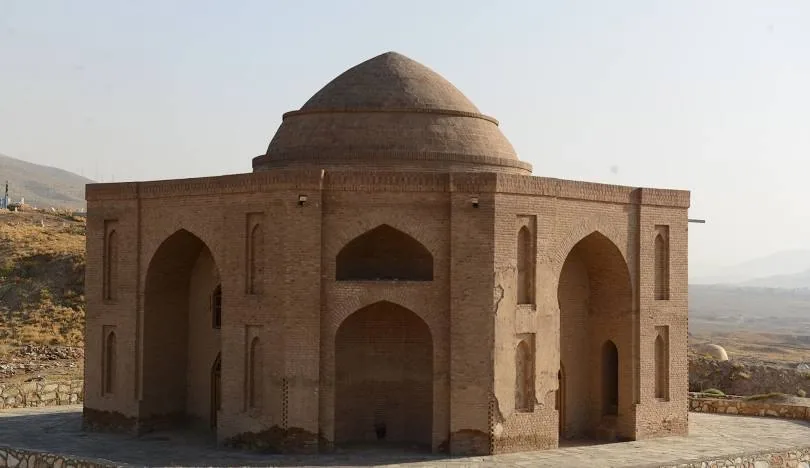
The car slows on the highway outside Ghazni. Ahead there is a striped barrier, a sandbagged post, and two young men with rifles slung across their backs. Your driver winds the window down. Nobody says very much.
Your guide passes a plastic folder through the window — passport, visa, and a sheet of paper carrying three stamps. The guard reads it, looks up at you, and grins. "Welcome." He asks where you are from. He tells you the road ahead is good. Then he points down the street towards a place that apparently does the best kebab in the province.
Ninety seconds, and you are moving again.
That folder is the difference between a ninety-second stop and a four-hour one. This is what goes in it, and how you get it.
Do you need a travel permit for Afghanistan?
Yes — and it is separate from your visa. A visa gets you into Afghanistan; it does not get you around it. To travel from Kabul to Bamyan, Balkh, Herat or anywhere else, you need physical, stamped permits naming the provinces you intend to visit.
This catches almost everyone out. Travellers spend weeks on the e-visa process, land in Kabul pleased with themselves, and discover on day two that the road out of the city is closed to them.
The permits are paper. Not an app, not an email, not a QR code. Paper, with ink stamps, that you carry on your body and hand to a stranger several times a day.
How the provincial permit system works
Travelling independently, the sequence usually runs like this:
- Arrive in Kabul. Your visa is checked at the airport. Nothing about onward travel is issued here.
- Go to the Ministry of Information and Culture. You present your passport, explain your itinerary province by province, and apply for a letter of introduction — the master authorisation everything else hangs off.
- Register on arrival in each province. Reaching Bamyan or Balkh, you report to the local directorate, register your presence, and have your regional permission stamped.
- Repeat. Every new province is a new office, a new queue, a new stamp.
Two things make this harder than the list suggests. The offices keep short and irregular hours, and very little of it happens in English. A morning you had budgeted for Babur's Gardens disappears into a corridor with a plastic chair in it.
The consequence of skipping a step is simple and non-negotiable: you get turned around at the provincial boundary. Not fined, not argued with — turned around, after however many hours of driving it took to get there.
What actually happens at a checkpoint
You will pass through a lot of them. Every major highway, every city entrance, sometimes a bridge or a mountain pass. If you have only ever seen Afghan checkpoints on the news, the first one is genuinely intimidating.
The reality, for a foreign visitor with correct paperwork, is far duller than the imagery suggests. The routine is almost always the same:
- The vehicle stops. Someone approaches the driver's side.
- They ask for passport, visa and provincial permits.
- They check that your driver and guide are registered.
- They wave you through.
Then there is the part nobody warns you about. Once it registers that you are a guest — that you came here on purpose, as a tourist — the temperature changes completely. Guards ask where you are from. They want to know what you think of the country. Somebody produces green tea. More than one traveller has been given directions to a viewpoint by the man who was, a minute earlier, inspecting their passport.
Afghans are proud of visitors choosing to come. That shows up in the strangest places, and a checkpoint is one of them.
Checkpoint etiquette that makes it easier
- Let your guide speak first. He knows the register and the greetings. Interrupting slows everything down.
- Wind the window down and take sunglasses off. Small thing; reads as respect.
- Do not photograph checkpoints. This is the one rule with real consequences. Cameras and phones down, well before you arrive.
- Keep your documents reachable. Not buried in a rucksack in the boot.
- Be unhurried. Impatience is the single fastest way to turn ninety seconds into an hour.
Arriving overland: Torkham and the northern borders
Flying into Kabul is the simple route. If you are coming overland, your paperwork is tested before you are even in the country.
Torkham, from Pakistan. Below the Khyber Pass, this is one of the busiest trade crossings in the region — lorries in their hundreds, porters, dust, noise. Expect thorough security checks, baggage screening, and detailed questions from immigration and intelligence officials about why exactly you are visiting. None of that is hostile. It is simply slow, and it is far slower if nobody is expecting you.
The northern crossings, from Tajikistan. Quieter, cooler, and tightly regulated. The thing that matters here is getting your entry stamp recorded properly and immediately. An unstamped or mis-stamped entry is an administrative problem that follows you across the whole country, and it is far easier to prevent than to unwind.
Border zones are the least forgiving places in Afghanistan to improvise. Whichever gate you use, have someone waiting on the Afghan side who knows your name and your itinerary.
What to carry, every single day
- Passport with a valid Afghan visa
- Original provincial travel permits, stamped
- Photocopies of all of the above, kept somewhere separate
- Photographs of everything on your phone, plus a copy in your email
- Your guide's and driver's registration documents
- Spare passport photos — offices ask, and there is rarely a photo booth
Carry the originals on your person, not in your luggage. Bags and people are occasionally separated; paperwork and person should not be.
How this works when you travel with Afghanly
None of the above should eat into a trip you have waited years to take. Standing in a ministry corridor is not why anyone comes to Afghanistan.
So we do it for you.
- Before you arrive. We coordinate your visa approvals, your accommodation and any internal flights, so the itinerary is settled before you land.
- Day one. Our team takes your documents and handles the provincial registrations with the ministries. Your permits are in the folder before you leave Kabul.
- On the road. Your guide and driver speak the languages, know the etiquette, and hand over the right papers before anyone has to ask twice.
- Throughout. Translators, a local SIM, and someone reachable 24/7 who knows exactly where you are.
That is what "like a friend" is meant to mean. Not a tour guide reciting dates at a monument — someone local, on your side, who has already made the phone calls.
Before you go
Afghanistan's requirements change with little notice, and they change faster than most published guides. Everything here reflects how the system worked as of August 2026. Confirm the current position before you book flights — with us, or with whoever is arranging your trip.
If you would rather not think about any of it: have a look at our itineraries, or tell us where you want to go and we will work out the paperwork behind it.
The permits are genuinely the hard part. The country itself is the easy part — and it is far more welcoming than you have been led to expect.